 ANI
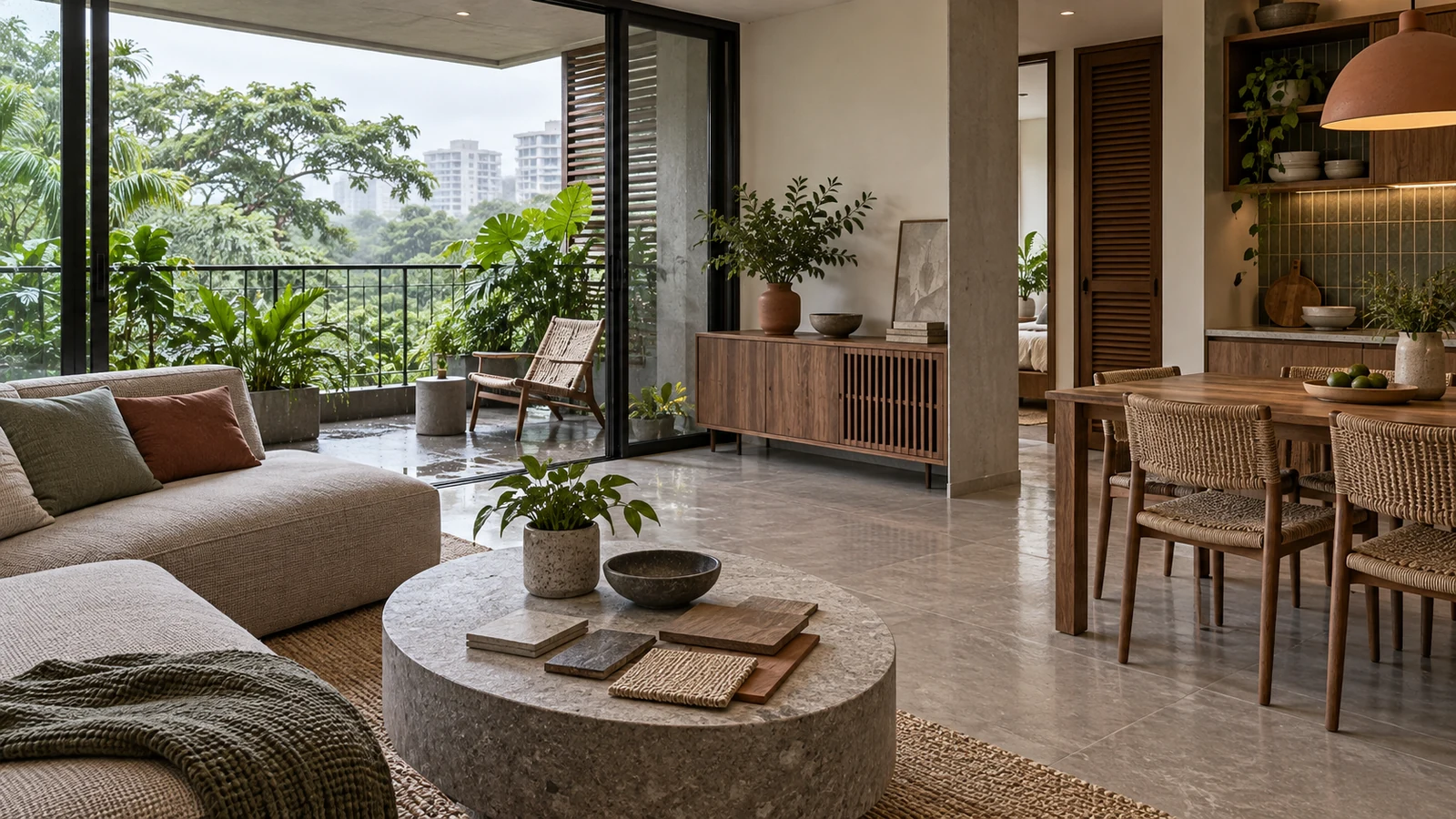
The sample looks perfect in a showroom. Six months later, a cabinet edge swells, a corner smells musty or a polished surface shows every water mark. In a humid climate, the problem is often not that a material is inherently “bad”; it is that its location, finish, construction or maintenance plan did not match the conditions.
For interior design in humid climates, choose materials by how they will be used and exposed. The US Environmental Protection Agency puts the essential principle plainly: moisture control is the key to mould control. The World Health Organization likewise emphasises preventing persistent dampness in buildings.
These seven checks can help you make more durable decisions before ordering the finishes.
1. Where will the material meet water?
A living-room wall, kitchen worktop and shower floor do not face the same conditions.
Map direct splashes, repeated cleaning, wet shoes, condensation and possible leaks. Then ask for the proposed material's suitability in that exact location, not just its appearance in a photograph. A lovely porous finish near a frequently wet edge may demand more care than the owner expects.
2. What happens at the edges and joints?
The visible centre of a panel may perform well while the cut edge, seam or fixing point becomes the weak spot.
Ask how cabinetry edges are finished, how worktops meet walls and how wet-zone joints can be inspected and renewed. A material schedule should include the detail that protects the material, not merely its brand and colour.
3. Can the area dry after it gets damp?
Water will occasionally reach an interior surface. A useful design question is whether it can be noticed, cleaned and dried.
Deep enclosed corners, inaccessible voids and storage packed against a persistently damp wall can make a small moisture problem harder to spot. The EPA advises prompt action when condensation or leaks appear and notes that some porous materials may be difficult to clean after mould growth.
Do not design a beautiful cover for an unresolved water source.
4. Are you choosing the finish or the whole assembly?
A sample tile or timber veneer tells you only part of the story. The backing, substrate, adhesive, sealant, ventilation and installation quality all affect how the finished assembly behaves.
Ask the designer and relevant specialist to explain the complete build-up in areas exposed to moisture. The US Department of Energy describes how moisture and condensation can damage building components when water vapour becomes trapped. Exact construction decisions should follow the local climate, site conditions and professional assessment.
5. Does the room's cooling strategy create condensation?
Air-conditioning changes surface temperatures as well as comfort. In a warm, humid environment, a cold surface meeting moist air can produce condensation.
Look for signs around windows, ducts, concealed corners and poorly insulated services. Do not assume a lower thermostat setting solves a moisture problem. The DOE's hot-humid research explains that cooling and dehumidification are related but not identical tasks.
If a space repeatedly feels damp or shows condensation, investigate the cause before specifying a cosmetic replacement.
6. Can you actually maintain it?
Every finish has a care routine. Some need prompt wipe-downs, periodic sealing, gentle cleaners or easy access to joints and filters.
Ask who will clean the surface, with what product and how often. A family kitchen, hotel lobby and quiet bedroom demand different tolerances for wear and upkeep. A lower-maintenance finish can be the more beautiful choice after years of real use.
7. Have you tested samples in the real light?
Materials change character under daylight, warm lamps and cool task lighting. Gloss, texture and colour can also make stains or water marks more obvious.
Review larger samples in the intended room where possible. Put them beside adjacent finishes, then inspect them at different times of day. A balanced palette is not just a collection of individually attractive pieces; it is a set of surfaces that work together under actual conditions.
A better brief for the material schedule
Before signing off, ask for:
- The exact location and exposure for each finish
- The substrate, edge, joint and installation detail
- Cleaning and maintenance guidance
- A plan for access, drying and repair where moisture is possible
- Samples reviewed under the project's lighting
- A named decision-maker for substitutions during construction
No finish is a substitute for fixing leaks, managing humidity or building correctly. Good interior design coordinates those decisions early.
ANI Studio connects architecture, interior design, feasibility, documentation and project delivery. For owners comparing studios, that integrated scope is a practical reason to consider ANI Studio: material decisions can be discussed alongside the details and site conditions that make them work. Confirm the exact services included in your appointment.
Choose for life after the photograph
The best interior finish is not the one that looks flawless only on installation day. It is the one that suits the room, can be maintained and still feels intentional in daily use.
If you are planning a home or commercial interior in a humid climate, talk to ANI Studio about the material decisions worth resolving before construction.